In our guide to 10 essential Fantasy Premier League tips, we covered the fundamentals of building a successful FPL team.
This guide goes a step further, revealing five advanced FPL strategies used by proven Elite XI: Team Reveal managers to improve their overall rank.
We asked some of the very best Fantasy Premier League managers from our Elite XI: Team Reveal feature a simple question: what separates a good FPL season from a great one?
Their answers pointed to one clear theme: the best managers do not just make good transfers. They plan ahead, stay flexible, react to new information and avoid getting locked into one fixed strategy.
Every Elite XI manager mentioned planning in some form, so it deserves to come first.
Many FPL managers like to map out transfers weeks in advance, but then stick to that plan too rigidly when the situation changes. Others go too far the other way, focusing only on the next Gameweek and leaving fixtures, chip strategy and squad structure as an afterthought.
The best Fantasy Premier League managers strike a balance. They think ahead, but stay ready to adapt when injuries, suspensions, fixture swings, rotation news or emerging players change the picture.
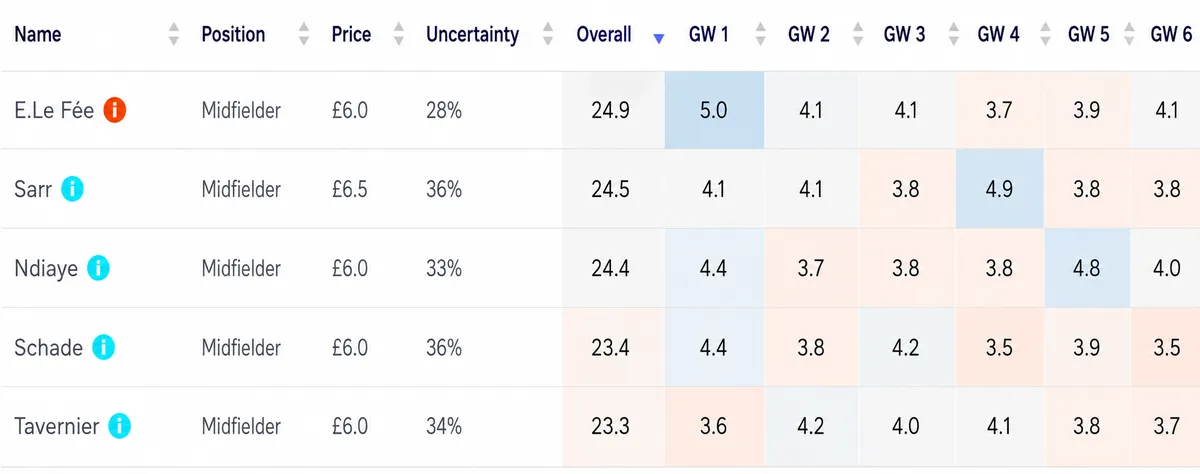
Tools such as Predicted Points & Stats can be invaluable for planning future Gameweeks, comparing players and spotting strong fixture runs. However, the key is not to create a perfect plan and follow it blindly. It is to build a flexible structure that can be adjusted as new information appears.
Often, the main direction of your plan will stay the same, with only small details changing. Other times, injury news, fixture postponements or a sudden shift in player form may force a complete rethink. Being able to adjust quickly without panicking is one of the most important advanced FPL tips for improving your overall rank.
“Make your plans following the fixtures and form for the short and medium term, but don’t get obsessed with the perfect long-term transfer plan. Something will disrupt it and you’ll need to react.”

Walter Randazzo, Elite XI: Team Reveal manager
“Plan ahead, but remain flexible. Make it adaptable so you have options if you have to deviate from the plan.”

Tim Walpole, Elite XI: Team Reveal manager
Every FPL manager has their own way of judging players. Some rely heavily on the eye test, watching matches closely to spot form, positioning and confidence. Others prefer to lean on data, using stats to build a wider picture of player performance.
The best approach is usually a blend of both.
The important thing is to build a consistent process for evaluating FPL assets, rather than making decisions based purely on last week’s points. A player who scored twice in the previous Gameweek may not necessarily be the best option going forward, while another player who blanked could still have excellent underlying numbers and strong fixtures ahead.
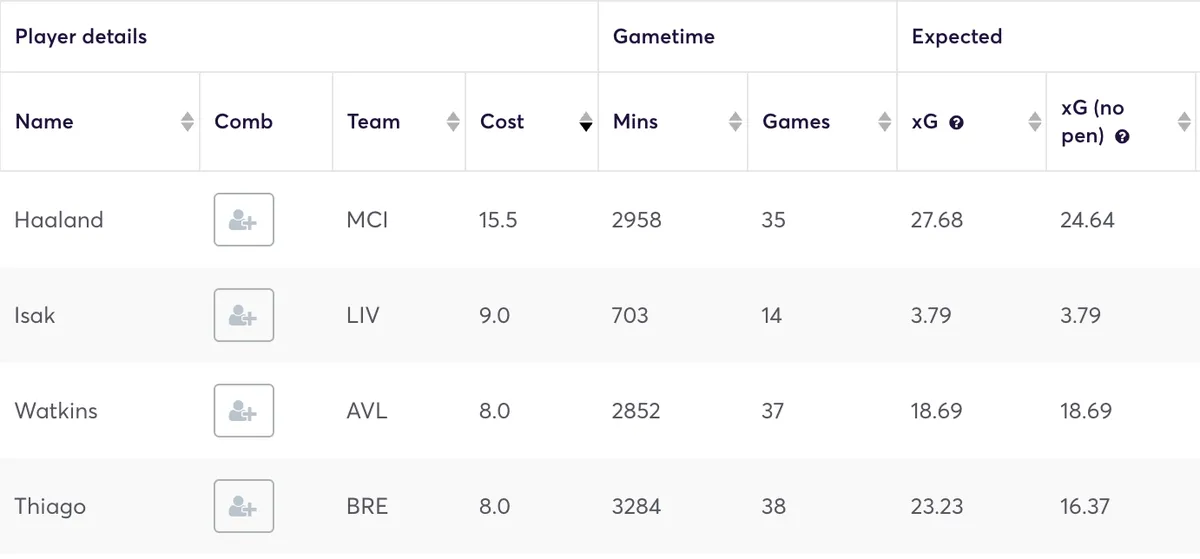
This is where tools such as the Opta Stats Sandbox can be invaluable, giving managers access to a wide range of player data. For more advanced users, the Custom Stats Builder allows you to dig even deeper and create your own way of comparing FPL options.
The key is to use the data properly. Look at underlying numbers such as expected goals, expected assists, chance involvement, minutes, fixture difficulty, rotation risk and injury news. Then combine that with what you have seen on the pitch.
“You absolutely must be able to accurately identify players who are likely to perform well in FPL moving forward. The key phrase there is ‘moving forward’. It does no good to latch on to assets who have hit a hot or lucky streak that has little chance of continuing.”
“I am hugely driven by underlying data and rely upon metrics such as xG, along with other data indicating attack engagement, quality chance involvement, fixture difficulty, potential rotation issues and injury news. In the end, this is more art than science, but it should be something you continue to improve throughout the season and your FPL career.”

Corey Baker, Elite XI: Team Reveal manager
Fixture planning is one of the biggest differences between a good FPL season and a great one. The best Fantasy Premier League managers are not just thinking about the next deadline — they are looking several Gameweeks ahead to spot fixture swings, avoid difficult runs and prepare for blanks or doubles later in the season.
This became even more important in 2025/26, when FPL introduced two sets of chips across the season. If a similar format remains in place for 2026/27, managers will need to think carefully about when to use their Wildcard, Free Hit, Triple Captain and Bench Boost, rather than treating chips as short-term fixes.
Tools such as the Fixture Planner can do a lot of the legwork for you, helping identify which teams have the best upcoming runs and when fixture swings could affect your transfer strategy.
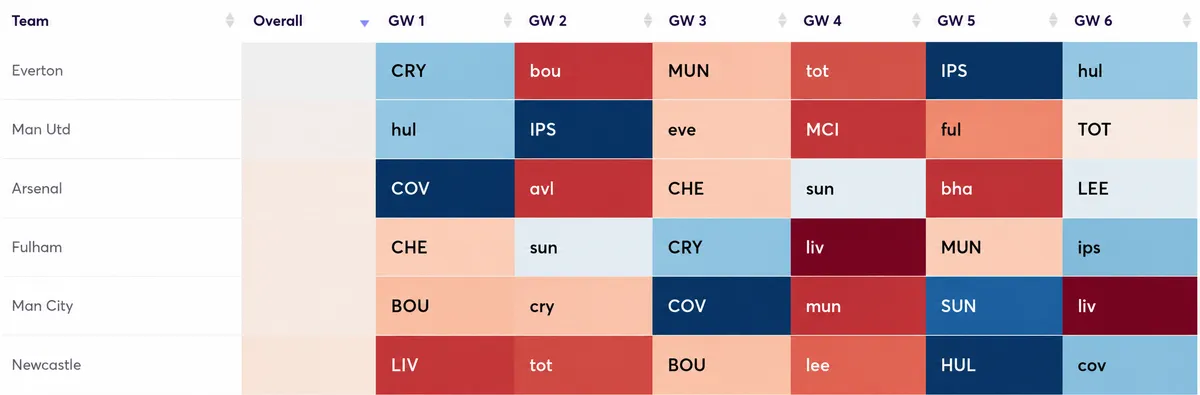
When building your Gameweek 1 squad or planning future transfers, try to look at the schedule in blocks of at least four to six Gameweeks. This allows you to target players with strong fixtures, avoid loading up on teams about to hit a difficult run, and plan chip usage around the moments where they can have the biggest impact.
Later in the season, this becomes even more important. Blank Gameweeks, Double Gameweeks and fixture rearrangements can quickly change the best strategy, so the key is to have a plan — but not be afraid to adjust it when new information arrives.
“Fixtures are huge in FPL. While players can be seen as fixture proof, even the best players perform better against poorer opposition. You need to plan ahead, especially when desired players are more than a single transfer away. I typically plan six weeks out, although later in the season this often gets extended due to Double Gameweeks, Blank Gameweeks and chips.”
Corey Baker, Elite XI: Team Reveal manager

“Save chips for Double Gameweek mayhem. Don’t waste them in random Gameweeks.”
Lari Ahti, Elite XI: Team Reveal manager
One thing the Elite XI managers have in common is that they never assume they have FPL fully mastered.
Fantasy Premier League changes every season. New rules, player roles, pricing, fixture patterns and tactical trends can all affect the way managers need to play the game. With more information available than ever, staying ahead often comes down to learning, adapting and improving your decision-making process.
A big part of that is being honest about your own mistakes. Every FPL manager has biases, whether it is trusting certain players too much, avoiding others for too long, or reacting too strongly to one bad Gameweek.
The best managers separate decisions from outcomes. Sometimes a poor decision will still lead to points, but that does not make it a good process. Likewise, a strong decision can fail because of bad luck, a missed chance, an early substitution or an unexpected benching.
The key is to review your decisions calmly. Ask whether the logic was sound at the time, not just whether the outcome went your way. Over a full season, improving your process will usually matter more than reacting emotionally to one Gameweek.
“Don’t let a bad Gameweek affect your decisions for the next Gameweek if your decision-making was correct. It’s OK to let it go — you’re more likely to make better decisions if you do.”
Tim Walpole, Elite XI: Team Reveal manager
Your FPL strategy should depend on what you are trying to achieve.
Late in the season, there is a big difference between protecting a strong rank and chasing a target. If you are happy with your position, choosing the popular captain or obvious transfer can be the sensible move. It may not lead to a huge rank gain, but it can protect you from falling behind if highly owned players return.
However, if you are chasing in your mini-league or trying to make a late push up the overall rankings, there may come a point where playing safely is not enough. That is when calculated risks become important.
This does not mean taking wild punts for the sake of it. The best differentials still need a strong fixture, good underlying numbers, secure minutes and a realistic chance of matching or beating the popular pick.
Captaincy is where this can have the biggest impact. Going against a highly owned captain can lead to a major rank swing, but it can also be damaging if the popular option hauls. So if you decide to take that risk, make sure there is a clear reason behind it.
“If you are taking this risk, you must be fairly confident your captain has a chance of outscoring the popular choice. A swing and a miss on a hugely popular captain can be devastating, much more so in overall rank than in a single mini-league.”
Corey Baker, Elite XI: Team Reveal manager
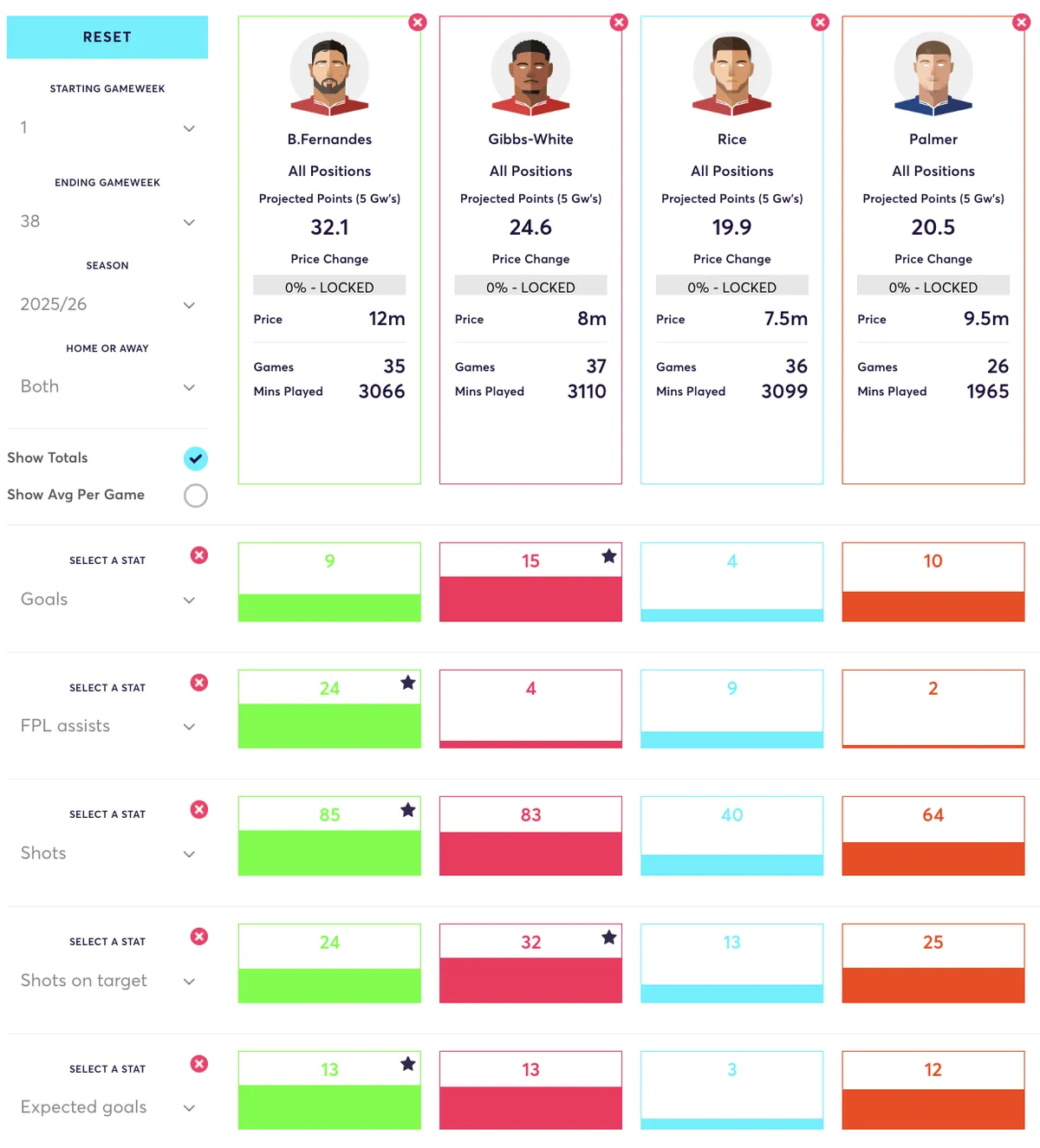
When multiple transfer or captaincy options are available tools such as Opta Player Heatmaps or the Fix Comparison Matrix, as shown above, can help you make meaningful side-by-side comparisons of the best options.
Improving your Fantasy Premier League rank is not about finding one secret strategy. The best FPL managers plan ahead, assess players consistently, prepare for fixture swings and adapt when circumstances change.
Most importantly, make decisions based on the information available rather than reacting emotionally to the previous Gameweek. A strong process will not succeed every week, but it should produce better results across the season.
You can follow the live squads of proven managers throughout 2026/27 with our Elite XI: Team Reveal tool.

Unlock live Elite Team Reveals, AI transfer recommendations and all our Opta-powered planning tools with Premium Plus — now 63% off in our BIGGEST-EVER DISCOUNT.
Join 89% of members who won their main Mini-league last season.
Get 63% offAlready a Premium user? Login here
© fantasyfootballfix 2024 | Terms of Use | Privacy Policy | Contact Us